Thursday, October 31, 2013

My Experience with Healthcare.gov

Being a technology focused healthcare professional who is also a consumer of healthcare, I wanted to have a first hand experience of how healthcare.gov is set up/work.
 
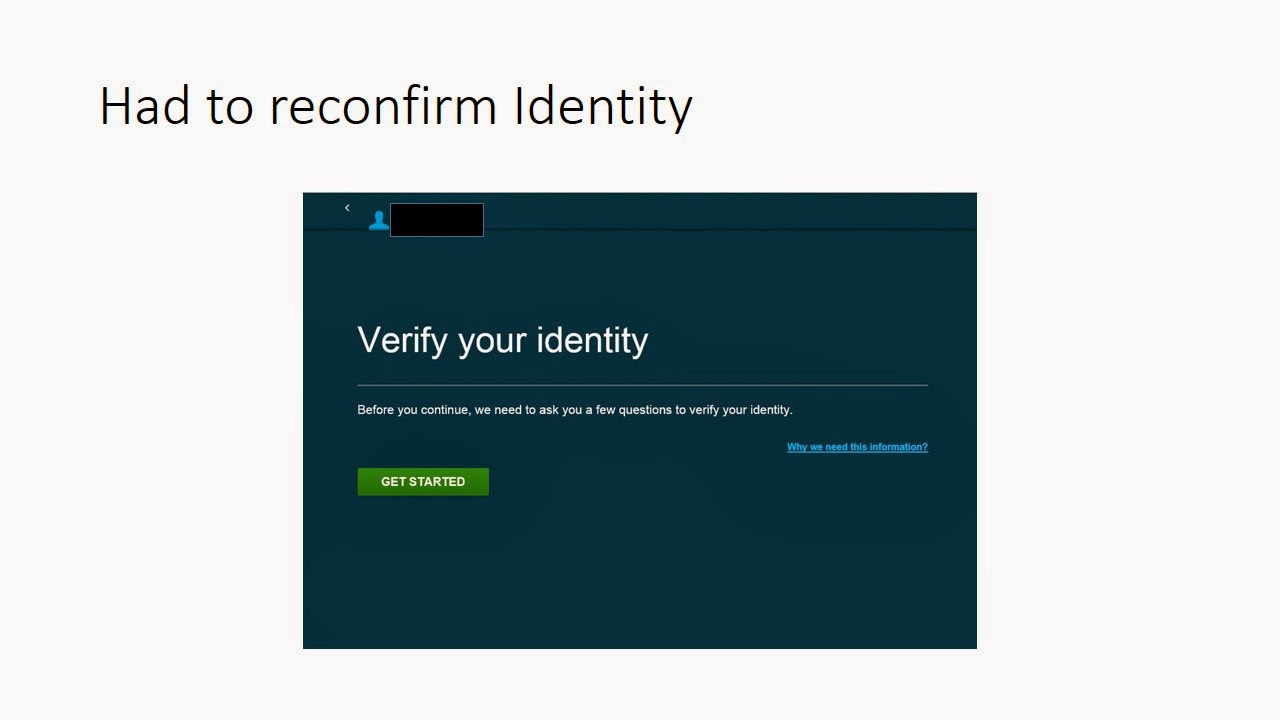
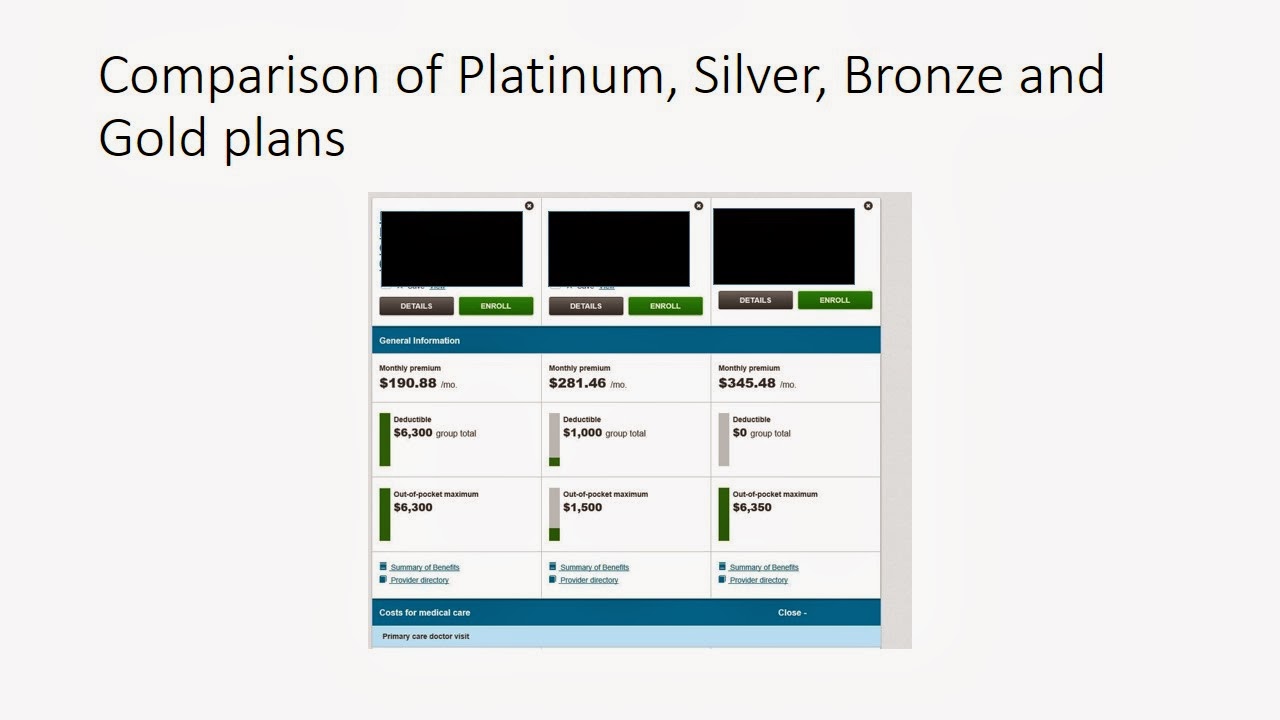
I had a change to create a login and navigate all the way into the healthcare.gov website. I took screen shots along the way to document what it looked and felt like. I tried the very first day and a few other times since then but did not go very far. Today, I made it through all the way.

This is not a blog about the politics or the law or the issues with the roll out. This is my experience with the website and the product.

I made a quick document with all that information - Attached to this post.


Thursday, May 2, 2013

Social media – A 4 step tool!


It has baffled me how many webinars and research articles come out that discuss “making social media work for you”. So here is one more. But, I want to give a tool, that can be applied, rather than just talk about “social media”.
I am laying out a simple quadrant that will help you and your institution, small or large, come up with a workable plan for social media. This is a tool that could be applied to an individual as well. From a handyman to a healthcare institution, this could be used as a starting point.

Step 1:
List what type of engagement you are trying to get along the “x axis”.

Step 2:

List who you are trying to reach along the “y axis” – Audience.

The picture  gives you an example that shows a starting point for a hospital (or any other organization) 


Step 3:
Fill the quadrants with goals that fall under the cell. In the picture above, you will see Ambulatory marketing falling under “patient and patient family (audience) and informational outreach (type of engagement)”

Step 4:
The final step is to identify the technologies that will be used to accomplish the appropriate need identified in step 3. See picture that clearly shows what technology to use to accomplish specific goals. In some cases, it lists the “success” models that we could emulate, like Khan Academy.


Using this model, helps you have a meaningful conversation with the marketing department and help navigate the technologies meaningfully, rather than starting with “OK, now we have Pinterest, what are we doing with it?”.

Friday, April 12, 2013

Taking the ambiguity out of enterprise architecture


I have been in a lot of discussions lately about the framework, structure and functionality of an EA program. While it has been well defined and documented, there is a lack of basic reasoning why an effort towards EA should be made. Many technology shops already do that, even if there is no formal structure in place.

Here are the 4 cores of structures to be in place to build a credible EA program.  

1.       Intent: Start with “why”
The first step towards getting the EA program is to have a strong intent of what problem, vision, strategy or a new product line you are trying to accomplish.

You use this stage to define the
-          Motive,
-          Agenda and
-          Behavior that you expect from this EA effort.

Example: If the intent is to solve physician communication, you start with the intent on what kind of physician communication issues you are trying to solve. You define the motives behind the need, such as better peer to peer communication, nursing to physician communication etc.

You can further this by understanding the various agendas in play. What is the “agenda” that the physicians have in the need for communication and how does the nursing staff’s agenda match the physician expectation.

The last piece is understanding the behavior of the parties that we are trying to serve. In this example, we know physicians, in general, prefer not to have the contacts published and do not like carrying multiple devices. With a deep awareness of the intent, you are off to a good start towards setting up a working EA model.

2.       Integrity: Plan for congruence

The second step is to use the outputs from step 1 and lay out a well-integrated plan that is rooted in sound principles that acknowledges technology, process and people to resolve the issue.

Example: To continue the physician communication example, it is critical to have consistency that can be demonstrated and reproduced, with respect to technology and process, so the soundness of the plan can be repeated for all aspects of communication, be it nursing or physicians or administrators. This kind of integrity to the process will help drive the technology vision. Currently many of the “strategies” are driven by the product or vendor. While those are both important, without integrity and clarity in vision, most of these products remain as products and does not help you form a strong EA plan.

3.
      
Capabilities: Relevance to the intent


The third step is a feedback to step 1. A very capable plan, architecture, technology and strategy inspires confidence. This capability drives the capacity to produce and accomplish the “intent” – with the right talent, skills, expectation, tools and even behavior.

Example: Be it physicians or anyone else that is looking for a solution, your ability to demonstrate and communicate the capabilities of the architecture is going to drive the acceptance of the solution. This is the first stage where “products” should be studied and analyzed.

4.       Results: Create a track record

Like everything else, results matter. They matter enormously to the credibility of the EA program. People evaluate the results and equate it to the strategic over lay. So creating a strong EA program will eventually be “discovered” because of the results it produces and not because we have an EA program.

As a final note to the example, have a clear understanding of the problem (need for instant communication and call management) – Intent; proposing a well integrated plan (communication with other physicians, nurses and integration to your patient list) – Integrity; clear execution of the tools and processes to enable better communication (audit, secure directory) – Capability; will ultimately lead to better measured results that can be equated to the success of the EA program.

So, rather than worrying about the “EA Program” focus on the 4 steps and the outcome will be a successful EA program.

Thursday, November 22, 2012

Are you agile?


Four years ago, one very late evening, I was sitting with a colleague of mine trying to come up with a plan for the unified communication strategy. I remember my colleague turning to me and announcing that strategy would be easy if things were not “traditional” in healthcare. Although traditional hierarchies and processes are optimized for day-to-day business they can’t handle the challenges of rapid change. 

All information technology departments are set up to handle the daily grime and support operations. After much discussion, we decided to create a “shadow” system, devoted to the design and implementation of strategy that is agile and operates under a different set of processes and guidelines. This system would continually assess the needs of the operation, industry and reacts with greater agility, speed and creativity. Harvard Business Review in the November 2012 edition talk about the need for creating this system within the organization to complement the “traditional” model. 

IT executives will have to create agility by forming a core team that is gathered around initiatives. And this “agile” team comes together on demand and is not meant to carry out orders from the leadership. Its members are change agents that bring energy, commitment and enthusiasm.  In this ever-changing healthcare landscape, creating this “second” structure within the traditional model requires a lot of IT maturity and something all organizations to strive for.

Wednesday, May 30, 2012

What is the connection between “A Faster Fourier Transform” and healthcare?


While the answer will become obvious as you read along, thefact that we are even asking this question validates why healthcare is laggingbehind in technology compared to other industries. How come the oil drillingindustries have technology that allows drills to auto navigate to find oil sources and positions a deep sea oil rig within a few feet of accuracy? Theanswer is applied engineering. Other industries apply right technology for aspecific problem. But in healthcare, we are catching up on “storing” and“printing”  patient records.  EMRs should be the lowest common denominator.With that said, Technology Executives have a duty to think about applied engineering in healthcare.

 There was a breakthrough in egg stem cell research mightallow stem cells in ovarian tissues to form new eggs. What’s in this for an ITexecutive? The company that did this was sold to GlaxoSmith Kline for $720Million which begs the question, “how will this disrupt healthcare?”

 There are ultra efficient solar power generators that couldessentially transform your windows into powerhouses. Light-Field Photographyhas the potential to change “imaging” in healthcare. Healthcare imaging isbased on traditional “image” transfer models, think about how much this willchange when you are able to pick layers within the picture and get it intofocus?  There are 3D transistors that arebeing built to make smaller and more powerful mobile devices. There arehigh-speed materials that are being discovered for new battery materials thatwill revolutionize “energy storage”

 There is a technology called Nanopore sequencing that allowsreading long DNA strands electronically allowing the possibility of genomesequencing a routine medical procedure.
Coming to the original question, Faster Fourier Transform,though an abstract theory will enable advanced multimedia devices and betterdata processing.
All these technologies will play a major role (indirectly,in most cases) in healthcare and as leaders we need to be ready to anticipatethis adapt to the impact.

The common thread that links all these technologies listedabove is that they have all been in the Technology Review published by MIT asthe top 10 Emerging Technologies.

Tuesday, May 22, 2012

Pixar or Disney - Case Study for Innovative Healthcare


Bob Iger, COO for Disney, recalls being at a new Disneyland opening in Hong Kong with Michael Eisner, CEO. He recalls watching the characters in the usual ceremony parade down the main street and realizing thatall the characters in the parade that had been created in the past decade were all Pixar’s.  After 10 years of The LionKing, Beauty and the Beast, and Aladdin, there were then ten years of nothing for Disney.
During the same time Pixar was not only creating successful characters but were also lining up characters and projects like Cars,Ratatouille and WALL-E.
Soon after that, in March 2005, Iger would replace Eisner asthe CEO and go before the board to explain his observation, which would lead tothe eventual Disney-Pixar merger. This merger would itself be an interestingstudy for another time but if you look at the deal, this was a reverse acquisition.
What happened here was classic “complacency” making theleader in characters – Disney lost its niche in the animations era. Walter Isaacson quoted Steve Jobs later on as saying “… we kept Pixar as a greatcompany and helped Disney remain one as well.”

This case study begs to ask the question what are we as Technology Executives doing to develop a “great IT department that will helphospitals remain one”. Technology leaders should be leading the next wave of innovative business and revenue models. Telehealth, e-visits, home health,patient experience and predictive modeling, Bio-medical and Clinical Engineering are a few (basic) areas of potential. More to come on other ventures that are beyond the traditional IT portfolio that will help hospitalsand organization push their competitive edge.

Tuesday, May 15, 2012

Who are you? A Business partner or an IT Executive?


I have attended various CIO and technology research conferences, which all seem to have top level IT executives talking about how to get a “seat” at the table and how not be seen as a cost center, but rather be a partner with the business. Keynote speaker after keynote speaker harped on this issue and over 5 years the discussion has not evolved into anything meaningful. IT executives should not get complacent using this as “the issue” and being part of a pity party.

If you ran a business that developed a product, lack of acceptance by the customer means that the product that was delivered was not something the customer wanted or someone else is delivering a better product than your business. We should not be going to a conference to figure out how to “make” customers buy it?

For a while now, at least in Health care, we've experienced a surge in “acceptance” doing “Electronic Medical Records” implementation projects. But, what's next? What is in the pipeline that is going to make or keep IT executives relevant?

The question IT executives need to answer is “what have you done for your company lately that will make you a business partner?”